Soda instead of baking powder in recipes offers a unique approach to baking, influencing both the flavor and texture of your culinary creations.
The strategic use of baking soda as a substitute for baking powder in certain recipes can significantly alter the final products taste and structure. Understanding when and how to employ this substitution is a valuable skill for any home cook.
Mastering this technique allows for finer control over the leavening process, resulting in distinct flavor profiles, particularly a subtle tang, and a denser, chewier texture. The reaction of baking soda with acidic ingredients creates carbon dioxide, the key to leavening.
Historically, the adjustment of leavening agents has been crucial to baking across diverse cultures and ingredient availabilities. The practice has evolved from simple observation to a refined understanding of chemical reactions in cooking, reflecting culinary innovation.
For everyday cooking, using baking soda in place of baking powder is beneficial in recipes already containing acidic ingredients like buttermilk, yogurt, or molasses. This ensures complete activation of the baking soda and prevents any metallic aftertaste.
Variations include adjusting the amount of baking soda to match the leavening power of baking powder or incorporating additional acidic elements to enhance the chemical reaction. A common misconception is that baking soda and baking powder are interchangeable in all recipes, which is not the case.
The following guide explores the nuances of utilizing baking soda instead of baking powder, providing insights to confidently adapt recipes and elevate your baking results. Learn how to navigate this substitution effectively.
Acid Activation
Acid activation is a fundamental principle when substituting baking soda for baking powder; it is the key that unlocks baking soda’s potential as a leavening agent in recipes. This chemical reaction shapes the outcome.
-
The Role of Acid
Baking soda (sodium bicarbonate) requires an acid to trigger the release of carbon dioxide gas, which causes baked goods to rise. Without an acid, baking soda remains inactive, leading to flat, dense results. Ingredients such as lemon juice, vinegar, buttermilk, yogurt, molasses, brown sugar, or cream of tartar are common sources of acidity in baking.
-
Balancing Act
The amount of baking soda used must be carefully balanced with the amount of acidic ingredients to ensure a complete reaction. Too much baking soda without sufficient acid can leave a metallic or soapy taste. Conversely, too much acid may result in a sour or tangy flavor. Achieving the right equilibrium is crucial for a pleasing final product.
-
Reaction Speed
The reaction between baking soda and an acid is immediate and vigorous, resulting in a rapid release of carbon dioxide. This differs from baking powder, which often contains both a fast-acting and slow-acting acid, creating a two-stage leavening process. Recipes using baking soda need to be baked promptly after mixing to capture the released gas.
-
Flavor Modification
The type of acid used can influence the final flavor profile of the baked goods. For example, buttermilk contributes a characteristic tangy flavor, while molasses adds a depth of sweetness. Skillful selection of acidic ingredients can enhance the overall taste complexity and complement other flavor components in the recipe.
Understanding acid activation transforms baking soda from a simple ingredient into a versatile tool, capable of yielding different flavors and textures. By mastering the balance between baking soda and acidic components, cooks can confidently create delicious, well-leavened baked goods that showcase the interplay of science and culinary creativity.
Flavor Profile
The choice to use baking soda instead of baking powder subtly yet significantly impacts the flavor profile of baked goods. This is due to the chemical reaction that occurs when baking soda interacts with acidic ingredients within a recipe.
Unlike baking powder, which contains its own acid component, baking soda requires an external acid, such as buttermilk, molasses, or lemon juice, to activate its leavening properties. This interaction introduces a unique tanginess or depth of flavor that is absent when using baking powder. For example, gingerbread recipes often call for baking soda and molasses, creating a rich, warm flavor profile. Similarly, using baking soda with buttermilk in pancakes imparts a subtle tartness that complements sweetness.
Ultimately, the decision to substitute baking soda influences not only the texture but also the overall flavor composition. This subtle yet influential change highlights the importance of understanding ingredient interactions to achieve desired culinary results. Skillful bakers will carefully consider the intended flavor profile and adjust the recipe accordingly.
Texture Impact
When baking soda steps in for baking powder, a noticeable shift in the texture of baked goods occurs. This alteration arises from the unique way baking soda reacts and influences the structure of doughs and batters.
-
Denser Crumb
The leavening action of baking soda, when paired with an acidic ingredient, tends to produce a denser crumb compared to the airy lightness often achieved with baking powder. This is because the reaction happens rapidly, creating larger air pockets and a more compact structure. Examples include hearty muffins or moist cakes where a substantial texture is desired.
-
Chewier Quality
The rapid release of carbon dioxide from baking soda contributes to a chewier quality in the final product. This is particularly evident in cookies, brownies, and certain types of bread. The accelerated leavening process strengthens the gluten strands, resulting in a more resilient and satisfying bite.
-
Enhanced Browning
Baking soda promotes browning due to its alkaline nature, which encourages the Maillard reaction on the surface of baked goods. This results in a richer color and more developed flavor. For instance, cookies baked with baking soda often have a crisp, caramelized edge and a soft, chewy center.
-
Moisture Retention
Recipes utilizing baking soda often exhibit improved moisture retention, leading to a more tender and longer-lasting final product. The chemical reaction that occurs helps to bind moisture within the baked goods, preventing them from drying out quickly. This quality makes baking soda a valuable addition to recipes where a moist and delicate texture is desired.
The textural characteristics imparted by baking soda, such as a denser crumb, chewier quality, enhanced browning, and moisture retention, underscore its versatility in baking. By understanding these effects, cooks can intentionally leverage baking soda to achieve specific textures and elevate the overall sensory experience of their culinary creations.
Tip Metadata
- Category: Ingredient Substitutions
Time & Effort
- Estimated Time: 2 minutes (for substitution decision)
- Skill Level: Beginner
- Impact: Alters flavor and texture, provides leavening when baking powder is unavailable
Tools or Materials Needed
- Baking Soda
- Acidic Ingredient (e.g., buttermilk, lemon juice, vinegar, molasses, yogurt)
Step-by-Step Guide
- Step 1: Assess Recipe Composition Determine if the recipe contains acidic ingredients like buttermilk, lemon juice, molasses, yogurt, or brown sugar. Baking soda requires acid for activation.
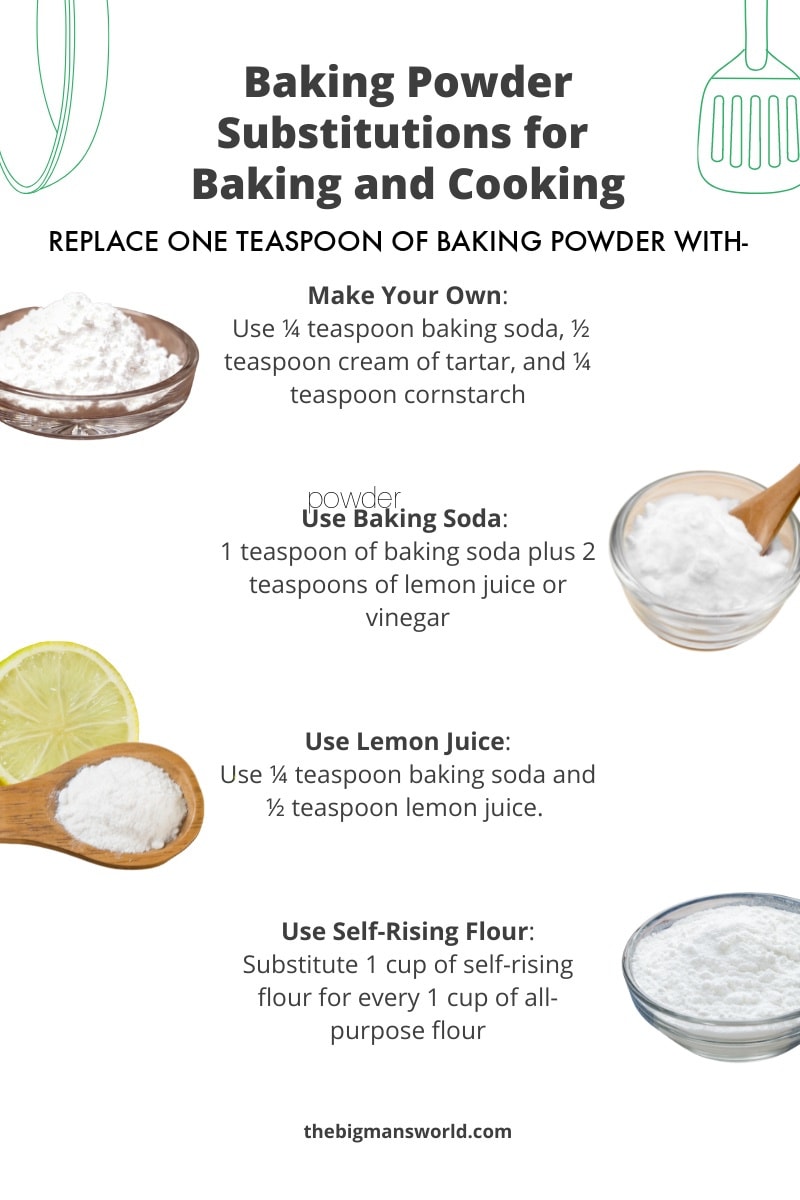
- Step 2: Calculate Substitution Ratio As a general guideline, use 1/4 teaspoon of baking soda to replace 1 teaspoon of baking powder. Adjust based on the amount of acidic ingredients in the recipe.
- Step 3: Incorporate Baking Soda Mix the baking soda thoroughly with the dry ingredients to ensure even distribution. This helps prevent pockets of concentrated soda, which can lead to uneven leavening or a bitter taste.
- Step 4: Add Acidic Ingredient Introduce the acidic ingredient as directed in the recipe. Be prepared to bake immediately after the wet and dry ingredients are combined, as the leavening action starts immediately upon contact.
- Step 5: Observe and Adjust During baking, monitor the rise and browning of the baked good. Subsequent batches may require slight adjustments to the baking soda and acid ratios to achieve the desired texture and flavor.
A common mistake is using baking soda in recipes lacking sufficient acidic components, leading to inadequate leavening and a metallic aftertaste. Variations involve using cream of tartar to create a homemade baking powder substitute (equal parts baking soda and cream of tartar). For recipes with minimal acid, consider adding a small amount of lemon juice or vinegar (about 1/2 teaspoon per cup of flour) to activate the baking soda.
Pro Tip or Variation
If a recipe lacks sufficient acidity, brown butter can be used. Browning butter intensifies its flavor and slightly increases its acidity, aiding in the activation of baking soda. Additionally, it imparts a nutty flavor and contributes to a chewier texture.
Best Practices & Expert Tips
- Balance Acid and Base: Ensure the recipe includes sufficient acidic ingredients like buttermilk, lemon juice, or molasses to react fully with baking soda. Inadequate acid leads to a metallic taste and poor leavening.
- Measure Accurately: Baking soda is potent; precise measurements are crucial. Use measuring spoons and level them carefully to avoid over- or under-leavening.
- Mix Thoroughly: Distribute baking soda evenly throughout the dry ingredients to prevent concentrated pockets that can cause uneven rising or a bitter taste.
- Bake Immediately: Once wet and dry ingredients are combined, bake promptly. The leavening action starts immediately, and delaying baking can reduce the rise.
- Consider Recipe Goals: Assess the desired texture and flavor profile. Baking soda creates a denser, chewier texture and a subtle tang, which may not suit all recipes.
Variations & Common Mistakes
- Cream of Tartar Addition: Create a baking powder substitute by combining baking soda and cream of tartar in a 1:2 ratio (baking soda to cream of tartar). This mimics double-acting baking powder.
- Acidic Liquid Adjustment: If using a different acidic liquid than specified (e.g., lemon juice instead of vinegar), adjust the amount to achieve the correct pH balance.
- Ignoring Recipe Acidity: Adding baking soda to a recipe without any acidic ingredients will not provide adequate leavening and can result in a flat, dense, and unpleasant-tasting product.
- Over-mixing the Batter: Once liquid and dry ingredients are combined, mix until just combined. Over-mixing develops gluten, resulting in a tough texture.
- Substituting Baking Powder 1:1: Do not substitute baking soda and baking powder in equal amounts. Baking soda is much stronger and requires an acidic ingredient to activate properly.
Why This Tip Matters
Mastering the art of using baking soda instead of baking powder empowers you to take greater control of your baking, offering unique flavors and textures.
Whether you’re adapting recipes, working with limited ingredients, or aiming for that perfect chewy cookie, this technique adds versatility to your cooking skills across diverse cuisines and levels of expertise.
So go ahead, give it a try! Experiment with different acids, adjust the ratios, and discover how this substitution can transform your favorite recipes. We encourage you to share your own tips, successes, or questions in the comments below.
Happy cooking!
Images References :
Image used for illustration purposes only. All rights belong to their respective owners.


